Vray For Revit 2016 2021 May 2026
#1 app in 140 countries, 4.6 average rating, 20 million users
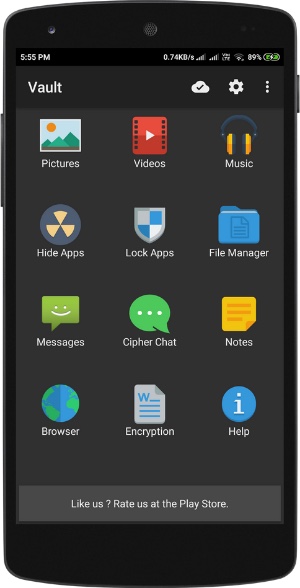



Hide photos, videos, music and apps on your phone

Access the hidden data with your fingerprint

Lock other apps with fingerprint or password to prevent others from opening them

Your data is encrypted and safely stored on your device

Create private notes on your phone

Browse the web privately with inbuilt private browser with ad-blocking and tracking protection

Chat and exchange photos with your loved ones in privacy with inbuilt chat app

Super Fast support system, available 24x7 for your help
Older versions (2016-2018) often conflict with Visual C++ Redistributables. If you get a "V-Ray for Revit failed to load," download the latest VC++ runtime (2015-2022) from Microsoft. This fixes 90% of legacy crashes.
If you’ve been in the architectural visualization game for a while, you know the struggle. You want the photorealism of V-Ray, but you need the live, parametric workflow of Revit.
For users clinging to older projects or firms with staggered software rollouts, the versions spanning Revit 2016 to Revit 2021 represent a golden era of transition. During these five years, V-Ray evolved from a clunky external renderer into a fully integrated real-time visualization tool.
Here is everything you need to know about running V-Ray for Revit across this specific generational gap.
V-Ray used Revit’s 3D views but added real camera effects: exposure (f-stop, shutter speed, ISO), depth of field, vignetting, and Lens Effects (glare, bloom). Perspective correction and orthographic views were fully supported.
If you are still on Revit 2016, you are missing out on significant rendering engine updates available in newer Revit versions
V-Ray for Revit is a high-end architectural rendering plugin that integrates directly into the Revit interface, allowing you to create photorealistic visualizations without leaving your BIM environment GDS Middle East Version Compatibility & Support For the specific range of Revit 2016 to 2021
, compatibility depends on which version of V-Ray you are installing: V-Ray 5 and 6
: These are the primary versions that cover the 2016–2021 range. While newer versions of V-Ray (like V-Ray 6) support Revit 2018 through 2024, older versions like V-Ray Next were typically used for Revit 2016 and 2017. Legacy Support
: Autodesk has officially ended support for older versions like Revit 2018, and generally, Chaos (the developer of V-Ray) focuses support on the last 5–6 versions of Revit. BIMsmith Blog Key Features for Revit Users Direct Integration
: You can render directly in the Revit viewport or a separate frame buffer, using Revit's native lights and materials as a starting point. Smart Assets : Access to Chaos Cosmos
, a library of high-quality, render-ready 3D content (people, plants, furniture) that doesn't bloat your Revit project file size. Post-Processing
: The V-Ray Frame Buffer allows for light mixing and color corrections after the render is finished, reducing the need for external software like Photoshop. GDS Middle East System Requirements
To run V-Ray effectively alongside Revit, your hardware should meet these minimum and recommended standards: : Intel 64, AMD64, or compatible with AVX2 support. 16 GB to 32 GB is highly recommended for complex BIM projects. Operating System : Windows 10 or 11 (64-bit).
: For GPU rendering, a modern NVIDIA card with at least 8 GB of VRAM is recommended. Chaos Docs Trial and Purchase Options Free Trial : You can test the software with a 30-day free trial available from the Chaos Official Site
: Chaos now primarily uses a subscription model (Solo, Premium, or Enterprise) which allows you to use one license across multiple host applications (Revit, SketchUp, Rhino, etc.). comparison between V-Ray and other Revit plugins like for your specific Revit version? System Requirements - V-Ray for SketchUp - Chaos Docs 29 Jan 2026 —
VRay for Revit: A Comprehensive Guide for Versions 2016 through 2021
V-Ray for Revit has revolutionized how architects and designers approach visualization within the BIM workflow. By bridging the gap between technical documentation and high-end photorealism, V-Ray allows users to create stunning imagery without ever leaving the Revit environment. This guide explores the evolution, features, and optimization of V-Ray across the pivotal versions from 2016 to 2021. The Evolution of V-Ray for Revit
In the early years, specifically around Revit 2016, V-Ray was a newcomer to the BIM scene. Before its integration, Revit users often had to export models to 3ds Max or Rhino to achieve professional-grade renders. The introduction of V-Ray for Revit changed this, offering a streamlined interface that respected Revit’s native logic while providing the powerful Chaos Group rendering engine.
As Revit moved toward the 2021 version, V-Ray evolved from a simple rendering plugin into a sophisticated visualization powerhouse. Key updates introduced during this period included the V-Ray Frame Buffer (VFB), an interactive rendering mode, and a massive library of high-quality assets known as Chaos Cosmos. Core Features Across Versions 2016–2021
Asset Editor: A centralized hub for managing materials, lights, and render settings. This tool brought a level of material depth—such as complex reflections and refractions—that Revit’s native engine simply couldn't match.
Chaos Cosmos: Introduced in later versions (near 2021), this built-in library provides render-ready 3D models of furniture, vegetation, and people. These assets are lightweight in the Revit viewport but render with full detail.
Interactive Rendering: This feature allows designers to see changes in lighting and materials in real-time. As you move a wall or change a floor finish in Revit 2019 or 2020, the V-Ray render window updates almost instantly.
V-Ray Swarm: A powerful distributed rendering system. If you were working in a studio environment between 2016 and 2021, Swarm allowed you to use the computing power of other machines on your network to speed up high-resolution renders.
Global Illumination: V-Ray’s advanced algorithms, like Brute Force and Light Cache, provide realistic light bounces that accurately simulate how sunlight and artificial light interact with interior spaces. Compatibility and System Requirements
Using V-Ray for Revit versions 2016 through 2021 requires a solid hardware foundation. Because Revit is primarily CPU-heavy and V-Ray can utilize both CPU and GPU (CUDA/RTX), a balanced build is essential. OS: Windows 8.1 or 10 (64-bit).
RAM: Minimum 8GB, though 16GB to 32GB is recommended for complex BIM models.
GPU: NVIDIA Maxwell-tier or newer for GPU rendering benefits.
Revit Versions: V-Ray maintains backward compatibility, but certain features (like RTX support) are only available in the later plugin updates compatible with Revit 2020 and 2021. Best Practices for Rendering in Revit
Optimize Revit Geometry: V-Ray renders what it sees. Ensure your Revit families are clean and free of overlapping geometry to avoid "flickering" or artifacts in the final image.
Use V-Ray Materials: While V-Ray can render native Revit materials, converting them to V-Ray materials unlocks advanced features like displacement maps and realistic translucency.
Lighting Strategy: Utilize the V-Ray Sun and Sky system for exteriors. For interiors, use "Portal Lights" near windows to help the engine calculate light bounces more efficiently.
Section Box Rendering: One of the best features for architects is the ability to use the Revit Section Box. V-Ray respects these boundaries, allowing for beautiful 3D sections and perspective cutaways. Conclusion
Whether you are maintaining a legacy project in Revit 2016 or leveraging the modern features of Revit 2021, V-Ray remains the industry standard for architectural visualization. Its ability to turn a technical BIM model into a cinematic experience makes it an indispensable tool for the modern architect. By mastering the Asset Editor, utilizing Chaos Cosmos, and optimizing your lighting workflow, you can produce professional results that win competitions and impress clients. vray for revit 2016 2021
Once upon a time in a busy architecture firm, a designer named Alex faced a common dilemma. Alex was working on a high-stakes project using Revit 2016, but the client wanted the kind of photorealistic visuals that the standard Revit engine just couldn't deliver. Then Alex discovered V-Ray for Revit.
It felt like magic. Instead of jumping back and forth between different programs, Alex could stay right inside the Revit interface. With the Appearance Manager, Alex quickly swapped flat Revit materials for high-end V-Ray assets, watching the lighting transform through Interactive Rendering. By the time the firm upgraded to Revit 2021, the workflow had evolved into a powerhouse. The Evolution of the Tool
In the early days (around Revit 2016), V-Ray was the newcomer, focusing on bridging the gap between BIM data and high-end visualization. By the time Revit 2021 arrived, V-Ray had become an essential "all-rounder" for architecture.
Integrated Workflow: Alex didn't have to worry about altering original BIM data; V-Ray worked on top of it, keeping the project files clean.
Hardware Power: As the project sizes grew, Alex made sure the workstation had enough RAM to handle the heavy lifting, especially when using GPU rendering for speed.
Version Transitions: Even when older versions like Revit 2019 became harder to find, the consistent V-Ray toolset meant Alex's skills remained sharp across every update.
In the end, Alex stopped being just a "drafter" and became a "visual storyteller," winning over the client with renders that looked more like photographs than blueprints. What is VRAY Next? - V-Ray - McNeel Forum
The period between 2016 and 2021 marked a pivotal era for architectural rendering. Before this, architects often had to export Revit models to software like 3ds Max for high-quality visuals. The introduction and subsequent refinement of V-Ray for Revit eliminated this "export-import" bottleneck, allowing professionals to generate photorealistic images directly within the BIM environment. Core Features and Integration
A primary strength of V-Ray in these versions is its seamless integration into the Revit UI. Once installed, it appears as a dedicated tab, giving users immediate access to essential tools:
Asset Management: The Chaos Cosmos library, introduced toward the end of this period, revolutionized how users add 3D content like furniture and vegetation without bloating the Revit file size.
Lighting Control: Users can toggle between natural environment lighting—using the V-Ray Sun and Sky—and complex artificial light setups directly within the model.
Material Overrides: While Revit materials are supported, V-Ray allows users to "override" them with physically accurate textures (diffuse, reflection, bump) for more realistic results. Rendering Modes: Interactive vs. Production
The workflow between 2016 and 2021 was defined by two distinct rendering modes:
Interactive Rendering: Utilizing the GPU, this mode provides real-time feedback. As you move the camera or change a material in Revit, the render updates instantly, making it ideal for the design development phase.
Production Rendering: This mode is used for the final "hero" shot. It typically relies on the CPU for maximum accuracy and allows for high-resolution outputs suitable for print or client presentations. Technical Advancements
Versions leading up to 2021 introduced powerful optimizations. For instance, V-Ray Swarm allowed for distributed rendering, harnessing the power of multiple computers on a network to slash render times. Additionally, the introduction of AI Denoisers (from NVIDIA and Intel) significantly reduced graininess in images, allowing high-quality results to be achieved in a fraction of the time. Conclusion
From its early days in 2016 to the more robust iterations of 2021, V-Ray has become an indispensable "secret weapon" for architects using Revit. It bridges the gap between technical BIM modeling and artistic visualization, ensuring that the design intent is communicated with as much realism as possible. exterior scenes? V-Ray for Revit - The Ultimate Guide and Tutorial (w/Ana)
V-Ray for Revit, developed by , is a professional rendering plugin that integrates photorealistic visualization directly into the BIM (Building Information Modeling) workflow. Between 2016 and 2021, the software evolved from a preview stage to a sophisticated tool supporting high-end architectural visualization without requiring users to export their models to other platforms. Evolution and Compatibility (2016–2021) Early Launch (2016):
V-Ray for Revit was officially introduced around late 2015 and early 2016, moving visualization from external software directly into the Revit Architecture interface. V-Ray 5 Milestone (2021):
By 2021, the software reached a major peak with V-Ray 5, which introduced real-time rendering via V-Ray Vision. Version Support:
V-Ray 5 specifically provided support for Revit versions 2018 through 2021. Core Components & Workflow
The integration allows architects to maintain their BIM data while enhancing visual quality through several key interfaces: Appearance Manager:
The primary tool for mapping Revit materials to high-quality V-Ray materials without changing the original Revit material settings. Asset Editor:
A centralized hub used to create, manage, and edit V-Ray-specific assets, including advanced materials and lighting. V-Ray Frame Buffer (VFB):
An advanced viewer that allows for post-production adjustments like Light Mix (changing light intensity after rendering) and basic compositing. Chaos Docs Key Features Introduced (Up to 2021) Chaos Cosmos: smart content library
containing thousands of high-quality, render-ready 3D models (people, vegetation, furniture) that can be placed directly into Revit. V-Ray Vision:
A real-time engine that allows users to explore their Revit models in a game-like environment while they design.
Tools to project unique materials (like graffiti or road markings) onto any surface geometry. Post-Production Tools: Capabilities such as sharpen/blur effects and a detailed Render Log for debugging complex scenes. Hardware and System Requirements Memory (RAM):
For efficient GPU rendering, it is recommended to have double the system memory compared to the VRAM on your graphics cards. GPU Rendering:
To utilize real-time features like Chaos Vantage Live Link or high-speed ray tracing, an NVIDIA RTX card is typically required. features for Revit? Which Revit versions are supported in V-Ray 5? - Chaos
V-Ray 5 for Revit supports Revit versions 2018, 2019, 2020 and 2021. Was this article helpful? 1 out of 2 found this helpful. Rendering in Revit With V-Ray - Chaos
V-Ray for Revit (2016–2021): The Essential Guide to Photorealistic BIM
V-Ray for Revit has revolutionized how architects and designers approach visualization by bridging the gap between Building Information Modeling (BIM) and high-end photorealism. For users working across Revit versions 2016 through 2021, this plugin offers a seamless, integrated workflow that allows for professional-grade rendering without ever leaving the Revit environment. Version Compatibility and Support Older versions (2016-2018) often conflict with Visual C++
Chaos Group (now Chaos) has maintained a steady cycle of updates to ensure compatibility with Autodesk’s annual Revit releases.
Revit 2016 Support: V-Ray was first introduced for Revit around 2016, offering designers a way to render directly from their BIM models.
Revit 2018–2021: V-Ray 5 for Revit specifically supports Revit versions 2018 through 2021.
Next-Gen Features: V-Ray Next for Revit (Update 1) expanded support to include Revit 2021, introducing significant performance boosts and new workflows like sun animation and view-specific settings. Key Features for Architectural Visualization
V-Ray for Revit is designed for architects, emphasizing ease of use and professional results.
Seamless Integration: It installs as a plugin, meaning no data export or import is required. All visualization decisions are stored within the Revit project.
Hybrid Rendering: Users can choose between CPU, GPU (using NVIDIA CUDA or RTX), or a hybrid of both to maximize hardware performance.
Appearance Manager: This tool allows you to map standard Revit materials to high-quality V-Ray materials without altering the original BIM database.
Chaos Cosmos Integration: Available in later versions (like V-Ray 5), Chaos Cosmos provides a built-in library of "render-ready" 3D assets, including furniture, plants, and people.
Lighting and Environment: V-Ray automatically converts Revit lights into V-Ray-compatible sources and offers advanced tools like the Light Gen for exploring hundreds of lighting scenarios automatically. Chaoshttps://www.chaos.com
How to Render in Revit Using V-Ray - Resources & Tips - Chaos
Once upon a time in the bustling world of architecture, there was a designer named Elias who had spent years crafting worlds within Autodesk Revit. His journey began in the era of Revit 2016, a time when designs were solid and functional, but often lacked the vibrant soul of reality. He would stare at his gray, clinical models, wishing for a way to breathe life into the cold digital stone. The Spark of Realism
Everything changed when Elias discovered V-Ray. By integrating this powerful rendering engine into his workflow, his 2016 projects were no longer just blueprints; they became windows into another world. He learned to apply V-Ray materials to his model text, turning simple labels into glowing neon signs and brushed metal finishes that caught the digital sun.
As the years marched toward 2021, Elias’s tools evolved. He moved through versions of Revit like a traveler through different eras, each one bringing more power and precision. By the time he reached the 2021 edition, the "deep integration" of Chaos V-Ray meant he never had to leave his BIM environment to create high-end visualizations. A Legacy of Light
One afternoon, while working on a complex heritage project, Elias needed to merge his old 2016 techniques with his new 2021 speed. He utilized the Bind Link feature to bring disparate models together, turning them into a single, cohesive masterpiece. With V-Ray Next powering his renders, his hardware—pumped up with 64GB of RAM to handle the heavy GPU load—never skipped a beat.
Looking back at his early Revit 2016 files from the vantage point of 2021, Elias realized that the software was more than just a tool; it was a bridge between a sketch and a dream, illuminated by the perfect light of a V-Ray render.
For a quick guide on getting the rendering engine installed within your design software: 55s V ray for Revit- How to Install Parametric BIM YouTube• Aug 18, 2024 Rendering in Revit With V-Ray - Chaos
V-Ray for Revit is a professional rendering plugin that bridges the gap between high-end architectural visualization and the
(Building Information Modeling) workflow. For versions spanning 2016 to 2021
, V-Ray evolved from a simple rendering tool into a comprehensive suite capable of real-time design exploration and high-fidelity photorealism. Quick Look: V-Ray for Revit Rendering
Unlocking Photorealistic Rendering in Revit with V-Ray: A Comprehensive Guide for 2016 and 2021 Users
As an architect, designer, or engineer, you understand the importance of visually stunning and accurate renderings in your work. Autodesk Revit is a popular Building Information Modeling (BIM) software that helps you create detailed designs and models. However, when it comes to rendering, Revit's built-in tools can be limited. This is where V-Ray comes in – a powerful rendering engine that integrates seamlessly with Revit. In this article, we'll explore the benefits and features of using V-Ray with Revit 2016 and 2021, and provide a comprehensive guide on how to get started.
What is V-Ray?
V-Ray is a rendering software developed by Chaos Group, a leading company in the field of computer graphics and rendering. V-Ray is designed to work with various 3D modeling software, including Autodesk Revit, and is widely used in the architecture, engineering, and product design industries. With V-Ray, you can create photorealistic images and animations that showcase your designs in a realistic and engaging way.
Benefits of Using V-Ray with Revit
So, why choose V-Ray over Revit's built-in rendering tools? Here are some benefits of using V-Ray with Revit:
V-Ray for Revit 2016
If you're using Revit 2016, you can still take advantage of V-Ray's powerful rendering capabilities. V-Ray for Revit 2016 offers many of the same features as the latest version, including:
V-Ray for Revit 2021
For users of Revit 2021, V-Ray offers even more features and improvements, including:
Getting Started with V-Ray for Revit
To get started with V-Ray for Revit, follow these steps:
Basic V-Ray Workflow
Here's a basic workflow for rendering with V-Ray in Revit:
Tips and Tricks
Here are some tips and tricks to help you get the most out of V-Ray for Revit:
Conclusion
V-Ray for Revit 2016 and 2021 offers a powerful and flexible rendering solution for architects, designers, and engineers. With its advanced features, improved performance, and seamless integration with Revit, V-Ray is the perfect tool for creating photorealistic renderings and animations. By following this guide, you'll be able to unlock the full potential of V-Ray and take your Revit designs to the next level.
Additional Resources
For more information on V-Ray for Revit, including tutorials, documentation, and customer support, visit the Chaos Group website. You can also join online communities and forums to connect with other V-Ray users and learn from their experiences.
System Requirements
To use V-Ray with Revit 2016 or 2021, ensure your computer meets the following system requirements:
By following this guide and using V-Ray with Revit, you'll be able to create stunning, photorealistic renderings and animations that bring your designs to life.
Since V-Ray for Revit has evolved significantly across these versions, this guide highlights core workflows, key feature changes, and practical tips for each major release period.
V-Ray for Revit from 2016 through 2021 progressively narrowed the gap between BIM authoring and high-end visualization, adding performance gains, better material and lighting tools, and improved distributed/GPU rendering in later releases—making it a robust choice for production architectural rendering inside Revit.
(Related search suggestions sent.)
Rendering is math. Heavy math. Revit is not a lightweight program. Combining the two can bring a standard office PC to its knees if you aren't careful.
Rendering inside Revit is only half the battle. V-Ray gives you industry-standard output channels (Render Elements).
Stick with Revit 2016 only if you have a perpetual license and render simple massing studies.
Move to Revit 2021 if you want to compete with Lumion or Enscape. V-Ray for Revit 2021 is the first version where you don't feel like you are fighting the software to get a photorealistic image.
Have you tried migrating an old 2016 V-Ray scene to 2021? Share your horror stories (or success tips) in the comments below!
For Revit versions 2016 through 2021, V-Ray offers a photorealistic rendering workflow that integrates directly into the Revit interface, eliminating the need for complex exports. 1. Getting Started: Installation and Setup
Installation: Double-click the installer and select the specific Revit version(s) you have installed (e.g., Revit 2016 or 2021). If you have issues, the official Chaos Docs installation guide recommends a clean uninstall of older versions.
Activation: Once installed, open Revit and navigate to the V-Ray tab. Click Acquire License to enable the plugin for your current session.
License Setup: For those using specialized setups, you can refer to the V-Ray License Setup Guide on Scribd for dongle or online activation. 2. Core Workflow Components
For Revit versions from 2016 to 2021 , V-Ray serves as a high-end rendering plugin that allows users to create photorealistic visuals directly within the Revit interface. While Revit provides built-in 2D text and 3D Model Text tools, V-Ray enhances how these elements appear in final presentations through advanced material, lighting, and camera settings. Working with Text in Revit (2016–2021) Text in Revit is primarily categorized into two types:
: Used for annotations, tags, and documentation. You can create custom styles by navigating to Manage > Additional Settings > Text Styles 3D Model Text
: These are actual 3D elements that can be placed on surfaces like walls. Architecture > Model Text and then use Set Work Plane to pick the specific face of a wall or floor. Properties : You can adjust the (thickness), font, and size via the Properties palette. Enhancing Text with V-Ray
Once your text is modeled in Revit, V-Ray can be used to professionalise its appearance:
: You can apply V-Ray materials to Model Text to simulate real-world finishes like brushed metal, glowing neon, or glass.
: V-Ray allows you to turn Model Text into a light source by using an Emissive material , which is ideal for architectural signage. Rendering Options : You can use Real-Time rendering
for quick previews of how the text interacts with shadows or Production rendering for the final high-quality output. Troubleshooting & Technical Tips Missing Text
: If text isn't appearing correctly, ensure the font is installed on your Windows system ( C:\Windows\Fonts GPU Rendering
: For Revit 2021 and similar versions, if you encounter GPU errors, you might need to adjust the VRayPlugins.json
file (typically found in your AppData folder) to resize textures properly. Flexible Text : For better control, consider creating Model Text within a Revit Family
. This allows you to parameterise the height and content so it can be easily reused across projects. If you’ve been in the architectural visualization game

This app has saved me from embarrassment so many times. I have over 4000 photos hidden in the app, and the app works like a charm

Kelly B.
Source: Twitter
Hundreds of options, fake screens and icons, multiple vaults etc. It is by far the most complete vault app. Can't believe it is free

Lori W.
Source: Twitter
Me and my wife are using this app for 6 years now to store our private moments. I really like how simple and powerful this app is.

Johnathan
Source: Play Store